
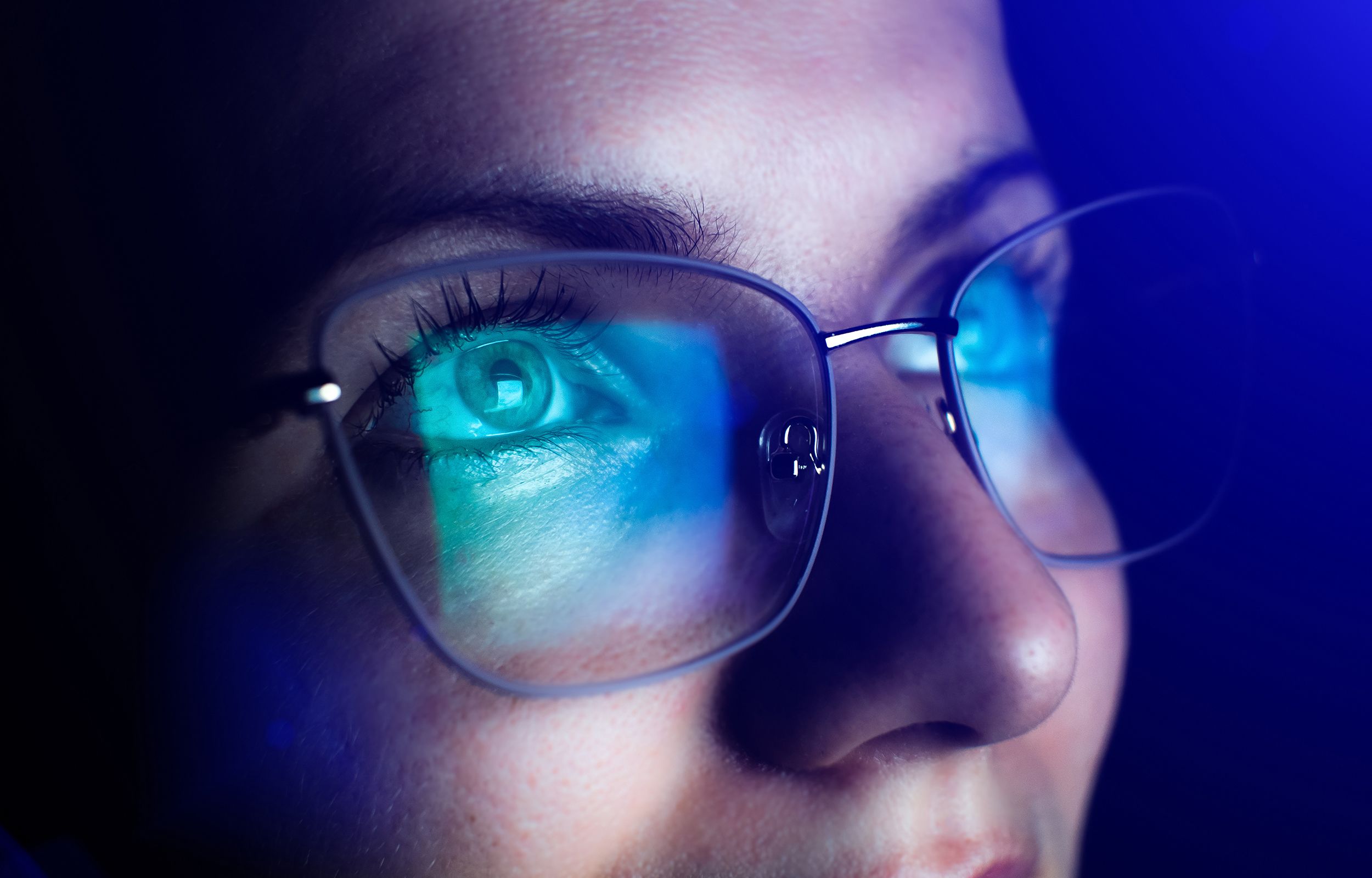
Essentially, blue light affects your sleep, which in turn can potentially affect your health.
People lived with much less artificial light for hundreds of years before technology began lighting our homes, workplaces, streets, and electronic devices. Today, evenings are illuminated by televisions, smartphones, computers, tablets, LED lighting, and countless other sources. We often take this easy access to light for granted without considering how nighttime exposure may affect our bodies.
At night, exposure to light can interfere with the body's biological clock, known as the circadian rhythm. When the circadian rhythm is disrupted, sleep can suffer. Research has also explored possible associations between nighttime light exposure and health conditions including cancer, diabetes, heart disease, and obesity. These associations do not necessarily mean that nighttime light directly causes these diseases, but they have raised important questions about how artificial light affects our health.
## What Is Blue Light?
Not all colors or wavelengths of light affect the body in the same way. Blue wavelengths can be beneficial during daylight hours because they help support attention, reaction times, alertness, and mood.
At night, however, blue light can be more disruptive. The widespread use of electronic screens and energy-efficient lighting has increased our exposure to blue wavelengths, particularly after the sun goes down.
## Is Nighttime Light Exposure Bad?
Some studies have suggested an association between exposure to light at night, including the type of exposure experienced by night-shift workers, and certain health conditions. These include some types of cancer, diabetes, heart disease, and obesity.
This does not prove that nighttime light exposure directly causes these conditions. Researchers continue to study the relationship and the reasons behind it.
What is known is that exposure to light can suppress the body's production of melatonin, a hormone that plays an important role in regulating the circadian rhythm and sleep. Even relatively dim light at night can interfere with circadian rhythm and melatonin production.
## Effects of Blue Light on Sleep
While many types of light can suppress melatonin production, blue light at night may have a particularly strong effect.
Researchers have compared several hours of blue-light exposure with exposure to green light of similar brightness. In one experiment, blue light suppressed melatonin for approximately twice as long as green light and shifted circadian rhythms by about twice as much.
This helps explain why using smartphones, tablets, computers, televisions, and other bright screens late at night may make it more difficult for some people to maintain their normal sleep schedule.
## LED Blue Light Exposure
The move toward energy-efficient lighting has provided significant environmental and economic benefits. However, LED and compact fluorescent lighting can also produce more blue light than traditional incandescent bulbs.
This makes the timing and intensity of artificial light worth considering, particularly during the hours leading up to bedtime. The concern is not necessarily that LED lighting itself is harmful, but that excessive exposure to certain wavelengths of light at night may interfere with the body's natural sleep cycle.
## Protect Yourself From Blue Light at Night
There are several simple ways to reduce nighttime blue-light exposure and support a more natural sleep schedule:
• Use dim, warmer-colored lighting at night. Red light has less effect on circadian rhythm and melatonin production than blue wavelengths.
• Consider reducing exposure to bright screens approximately two to three hours before going to bed.
• If you work a night shift or regularly use electronic devices at night, consider blue-light filtering options, including appropriate eyewear or device settings that reduce blue and green wavelengths.
• Get plenty of bright light during the daytime. Daylight exposure can help support your natural sleep-wake cycle while also contributing to daytime alertness and mood.
## Finding a Healthy Balance
Technology and artificial lighting are now part of everyday life, and eliminating blue light entirely is neither realistic nor necessary. Blue light itself serves an important purpose, particularly during daylight hours when it can contribute to alertness and normal daily activity.
The greater concern is when and how much blue light we receive, especially late in the evening. Reducing unnecessary exposure to bright screens and artificial lighting before bedtime may help support the body's natural circadian rhythm and improve sleep habits.
Being aware of blue-light exposure is a simple way to make more informed choices about your nighttime routine, your sleep environment, and your overall vision and wellness habits.